How to determine the security of blockchain technology?

blockchain programming

The blockchain is globally considered as one of the most secure ways for storing and transferring digital information but how do you determine the security of blockchain or find out whether it is secure enough for your systems? Let’s discuss.

The security of Blockchain lies in its ability to ensure transparent, immutable and tamper-proof transactions. This is managed by the various characteristics of blockchain, such as Decentralization, Cryptography and Consensus. So, the security aspect of a blockchain can only be understood in the terms of these features.

Decentralization – A single distributed ledger of transactions

Traditional ways to store and transact information are mostly centralized. Such a system maintains a single centralized copy of the transactions performed through the system. Since the entire system is in control of a single entity, there is a high probability of fraud in transactions as the centralized copy is easy to access and modify. Also, informing all the users of the network about every change or update is a time-consuming and costly matter.

Blockchain provides a solution in terms of a decentralized network where a copy of the same information is distributed among all users of the network. Each new transaction or change is verified by the network before it is added to a new block in the chain. The benefit is that even though the transactions are public, they are not easily mutable. In order to update a transaction, each copy of the ledger with each node must be updated simultaneously. Therefore, each node/user would know about every change and can immediately spot a fraud transaction or error.

Cryptography – Complex algorithms to divert attacks

We all are familiar with the term cryptography. It involves mathematical algorithms designed to identify and prevent attacks. So, what’s so great about blockchain cryptography?

You might be wondering by now that how the information and data in a blockchain are protected against threats like cyber attacks. This is where cryptography comes in. Data on a blockchain are protected through complex crypto algorithms. Each new transaction in the network is hashed, or in other terms, masked to hide its original identity. This is done via a predefined cryptography algorithm which converts the input value in a totally random string of a fixed length. This is then added to the blockchain.

In order to access hashed data, the user will require the public-private key combination that was used to encrypte that information. The private key of each user is also encrypted into a public key which is visible to other users who want to send/receive data with that user.

The great thing about cryptography is that the information once encrypted or hashed cannot be reverse engineered. This is how information is protected on a blockchain.

A perfect example of a blockchain-based secure marketplace ecosystem is Era Swap Ecosystem, which employs very secure hybrid blockchain to protect user transactions on the platform. It utilizes the Ethereum (ERC20) blockchain to manage public transactions and the hyperledger/Quorum blockchain for internal transactions. The benefit is that all the transactions on the Era Swap blockchain are completely secure, protected and transparent.

Visit: http://www.blocklogy.org/Download: https://play.google.com/store/apps/details?id=com.blocklogy.appp

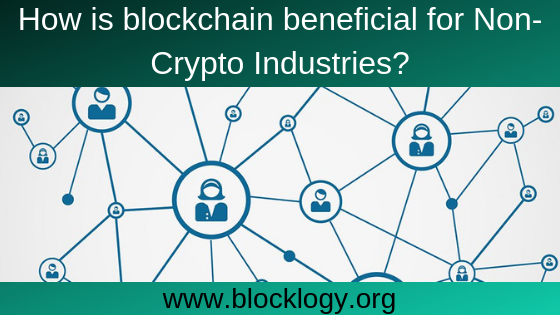
How blockchain can improve the education sector?

Blockchain is a modern technology for digital transactions accessible worldwide. In the coming future, it looks like to play a vital role not only in the global economy but also in every individual’s life. As per an estimate from the World Economic Forum (2015), the blockchain technologies will contribute at least 10 percent of the world’s GDP (USD 100 trillion) and 5 per cent will be managed via digital assets.

Simply, a blockchain is a book of records (or units of value) shared among a community. Every member in the community has the ease of maintaining his/her copy of the information, which is kept as a set of transactions (a currency or other unit), contracts (agreements to move assets, funds, or information) or anything in a digital form. Any sorts of alteration or addition made to this shared copy are added as a new “block” at the end of a “chain”.

How can blockchain change the face of education?

Blockchain technology, for your information, is a chain of endless records and does not allow deleting of records. It is highly secure with immutability.

In education, it can be used to store endless records of students, as their attendance, courses, grades, payment toward tuition, coursework and much more. With blockchain, not only the school but also the students can have an eye on their records and transactions. If any record has been saved once, no participant can make alterations. For any error in records, a new record will be added to rectify it and both the incorrect and correct records will be visible to participants.

The blockchain benefits through an open implementation of the technology as computer software. The copyright holder of the software has the rights of assigning permissions and responsibilities to others.

The blockchain-based technology organizations in education will be networks of educational organizations finding new ways of educating and informing their students.

Blocklogy developed by KMPARDS is one such innovative step in the direction of making blockchain education much more accessible to the masses. It is an e-learning app that enables anyone to join and learn through formal blockchain courses and become an expert in it.

Visit: http://www.blocklogy.org/
Download: https://play.google.com/store/apps/details?id=com.blocklogy.appp

How is blockchain beneficial for masses?

blockchain

With Bitcoins and blockchain being two of the most talked about segment in the technology world, it is not a surprise if you find yourself attracted to this sector. In fact, it would be the most natural thing to do, given that blockchain is now being treated as a prominent technology for the future.

When we talk about blockchain application, the first thing that comes to our minds is what are the real-world uses of this technology, or if it has one. The good news is that blockchain is much more than just a platform for cryptocurrency to operate.

In the most basic terms, the blockchain is a technology that provides a way for performing secure and transparent transactions involving digital assets like cryptocurrencies. In technical terms, it is a decentralized, distributed public ledger that verifies and stores all the transactions that pass through it. As a technology, the blockchain has immense applications in every sector which involves a digital transfer of valuable assets and/or information.

The problem with cryptocurrencies like Bitcoin is that they are highly volatile in nature. This limits their general uses by a large audience. However, the underlying technology, blockchain, is not limited by any such issues. It has the power to be used in relevant applications in a wide range of industries. Following are some of the most significant benefits of blockchain for businesses in a variety of sectors:

Supply Chain

The major problems of the supply chain industry include lack of transparency and high cost. Blockchain can effectively deal with these issues by providing a secure way of tracking the movement of supplies while reducing the cost of communication and transaction.

Accounting and Record-keeping

Security remains a big concern with online storage of records and any type of digital files. Blockchain provides a secure way for not only storing but also transferring such records without any human intervention and less chances of error.

Voting

Voting is one of the areas which are seeing active use of blockchain-based applications. Even some of the governments have started experimenting with this technology for conducting completely electronic and fraud-free elections.

Freelancing

Freelancing is one of the fastest growing industries around the globe. The freelancers’ problems of finding reliable and cost-effective platforms for work can be resolved by the blockchain technology. EraSwap is one such project which involves building a blockchain-based platform to allow freelancers to provide services directly to potential clients, eliminating the middleman, reducing the cost and increasing the transparency.

Healthcare

The healthcare sector can also benefit a lot in terms of decentralized public access to records and data of medical care, hospitals and doctors which will enable patients to get the right care at a right time and in their budget.

There are many other industries, such as quality assurance, banking & finance, stock exchange, digital identity and energy supply, which can benefit immensely by the applications based on the blockchain technology. The attempts to improve the blockchain technology to make it suitable for general uses and worldwide applications are ongoing, and it won’t be long before we will see many more such applications out there.

Visit our website: http://www.blocklogy.org/Download: https://play.google.com/store/apps/details…